
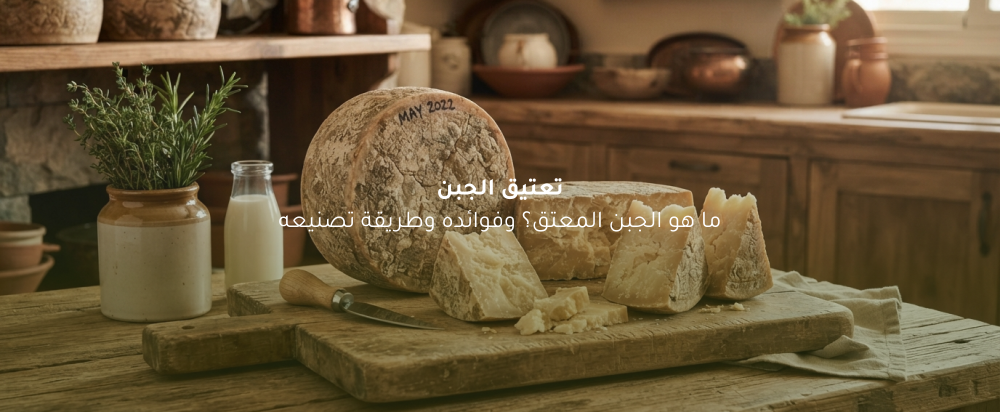
Aging is one of the most important stages in cheese development, giving some types of cheese their distinctive flavor and texture. During this process, the cheese transforms from a simple, fresh product into a cheese with a deeper taste, aroma, and texture. The aging period varies from one type of cheese to another; some cheeses require only a few weeks, while others need several months or even years to achieve the desired flavor.
Aging is not limited to leaving the cheese for a period of time only, but the process takes place under specific conditions of heat and humidity with continuous monitoring, so that the flavor and texture develop in a suitable and safe way.
In this article we learn about the meaning of aged cheese, how it is made, its most prominent benefits, and the most important factors that affect the quality of the aging process.
What is aged cheese?
Aged cheese is cheese that, after its manufacture, is left for a specific period of time in a suitable environment that allows natural changes to occur in the proteins, fats, and moisture within it.
During the cheese aging period , a series of biological and chemical reactions begin that gradually lead to changes in taste, texture, and smell.
Cheese may start out with a soft texture and mild flavor, then become firmer and stronger in taste over time.
Some of the most famous types of cheese that rely on aging include:
- Cheddar.
- Parmesan.
- Aged Joda.
- Some types of blue cheese.
- Different types of hard and semi-hard cheese.
The characteristics of each type vary depending on the milk used, the manufacturing method, the aging period, and the storage conditions.
How is cheese aged?
The aging process goes through several stages that begin after the cheese has been manufactured and shaped.
cheese preparation
After the milk curdles and the whey separates, the cheese is shaped and pressed according to the desired type.
Salt may be added at this stage, either directly or by placing the cheese in a brine solution.
Temperature control
Cheese is stored at specific temperatures appropriate to its type. Inappropriately high or low temperatures can affect the quality of the aging process.
humidity control
Humidity is one of the most important factors in the cheese aging process , as it affects the amount of water the cheese loses and the formation of the outer rind.
Stirring the cheese
Some types of cheese need to be stirred periodically to ensure that moisture is evenly distributed and a homogeneous texture is achieved.
Wait until the flavor is fully developed
The aging period varies depending on the species. Aging may extend from several weeks to several months, while some species require years.
What happens during cheese aging?
During aging, gradual changes occur in the components of the cheese.
Parts of proteins break down into smaller compounds, which helps develop flavor and texture. Changes also occur in fats, contributing to the distinctive aroma and taste of each type.
At the same time, the cheese loses some of its moisture, and therefore the texture in many types becomes firmer and more concentrated as the aging period increases.
This is why a small piece of aged cheese may have a much stronger flavor than a larger quantity of fresh cheese.
What are the benefits of aged cheese?
Aged cheese typically contains a range of nutrients found in milk, and the amounts vary depending on the type of cheese and how it is made.
Among the most notable benefits of aged cheese are:
Good source of protein
Cheese provides protein which contributes to maintaining muscle mass and building body tissues.
Contains calcium
Many types of aged cheese are a good source of calcium, an important element for healthy bones and teeth.
It contains phosphorus
Phosphorus works with calcium to support bone health, and is also involved in a number of vital functions within the body.
Strong flavor in a small quantity
Because of the concentrated flavor resulting from the aging of the cheese , a small amount can be used to add a distinct taste to dishes, making it suitable for salads, pasta, and sandwiches.
Is aged cheese healthy?
Aged cheese can be part of a balanced diet when consumed in moderation.
It provides protein and calcium, but it may also contain high levels of saturated fat and sodium, especially in some hard or highly salted varieties.
Therefore, it is advisable to pay attention to portion size and read the nutrition label, especially for people who need to reduce sodium or fat in their diet.
What is the difference between fresh cheese and aged cheese?
The main difference lies in the manufacturing time, the nature of the flavor, and the texture.
Fresh cheese is usually consumed shortly after manufacturing and is characterized by a higher moisture content, soft texture and mild flavor.
Aged cheese, on the other hand, undergoes a longer maturation period, so it becomes denser in texture and deeper in flavor.
It also usually helps to reduce the moisture content, which helps some types of cheese to retain their quality for a longer period compared to fresh types.
Does aging cheese affect lactose?
During the cheese-making and aging process, a large portion of the lactose is removed with the whey, and another portion is consumed by bacteria present in the cheese during ripening.
This is why some types of aged cheese contain less lactose compared to milk or fresh cheese.
However, the quantity varies from product to product, so people with lactose intolerance should check the product information or consult a specialist if needed.
What factors affect the quality of cheese aging?
Several factors influence the final outcome of the process, including:
- The type of milk used.
- The type of bacteria or cultures used in manufacturing.
- temperature.
- Humidity level.
- Amount of salt.
- Aging period.
- The size and shape of the cheese slice.
- Storage method.
Therefore, flavor and texture can vary even between types of cheese that look similar.
How is aged cheese used in recipes?
Aged cheese can be used in many ways, especially because of its strong flavor.
It can be grated over pasta, added to salads, served with bread, or used in sandwiches and breakfast dishes.
It can also be combined with fruits, nuts, or honey, depending on the type of cheese, to achieve a balance between salty and sweet flavors.
How do you preserve aged cheese after purchasing it?
Even after it is completed, the product needs proper storage to maintain its quality.
It is best to keep it in the refrigerator as recommended on the package, and to wrap it appropriately to reduce moisture loss and prevent odor absorption.
It is also preferable not to leave it at room temperature for long periods, and to use clean tools when cutting.
If an unusual change in color, smell, or texture occurs, the product should be checked for safety before consumption.
Discover the cheese products from Khayrat Laziza
Aging cheese gives each type its own distinct character, from texture to flavor and aroma. Therefore, understanding the aging process helps you appreciate the differences between varieties and choose the product that best suits your needs and preferences.